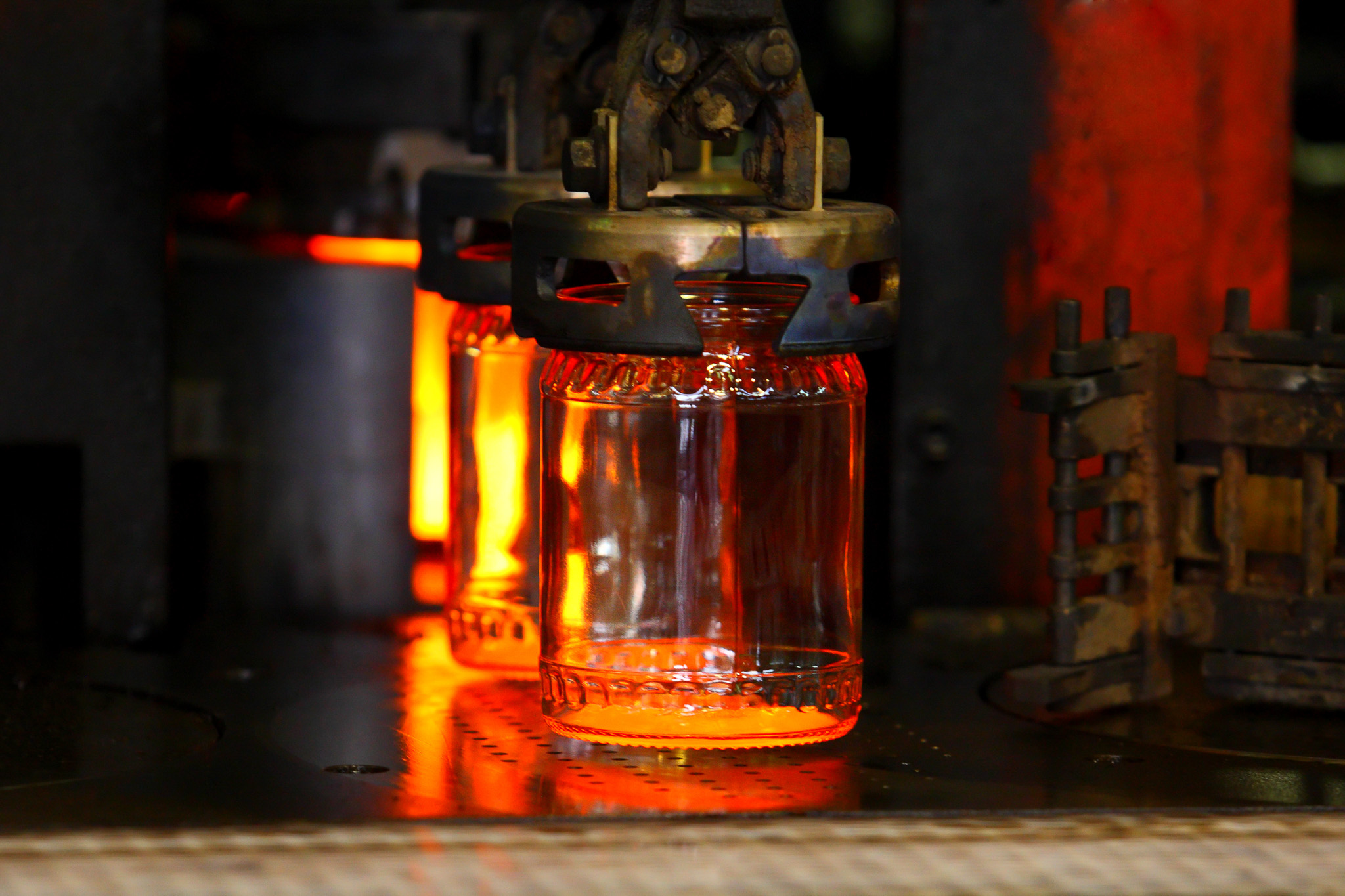
When evaluating the sustainability of a packaging material, it is not enough to look at the finished product on a retail shelf. True environmental responsibility is forged right at the beginning, inside the manufacturing facility.
For glass to fully realise its potential as the most environmentally responsible packaging material, the production process itself must evolve. At Isanti Glass, sustainability is built directly into how our glass is made. By combining engineering innovations with strict resource management, modern glass production is proving that industrial scale and a small environmental footprint can go hand in hand.
Here is how cutting-edge manufacturing practices are redefining the future of sustainable glass packaging.
Optimising the Melt with High Cullet Ratios
The foundational secret to low emission glass manufacturing lies in a single material: cullet (recycled processed glass).
When raw materials like sand, limestone, and soda ash are melted to form glass, it requires a high thermal threshold. Cullet, however, melts at a significantly lower temperature than raw ingredients.
- Energy Reduction: For every 10% increase in cullet used in the batch, the energy required to run the furnace drops by approximately 2.5% to 3%.
- Emission Control: Lower melting temperatures translate directly into reduced greenhouse gas emissions from the manufacturing plant, allowing facilities to drastically reduce their carbon output while maximising production volume.
Engineering Lower Emission Furnaces
The heart of any glass plant is its furnace. Traditional manufacturing historically relied on heavy fossil fuel consumption to maintain the intense temperatures required for continuous container production.
Today’s responsible manufacturing relies on advanced furnace designs. By integrating oxygen combustion technologies and electric boosting systems, modern furnaces burn fuel far more cleanly and efficiently. These thermodynamic enhancements ensure that heat distribution is perfectly targeted, drastically minimising nitrogen oxide and carbon dioxide byproducts before they ever reach the stack.
Capturing Potential: Waste Heat Recovery Systems
Industrial manufacturing naturally generates high thermal energy, but in a sustainable facility, that heat is never wasted. Advanced production lines feature Waste Heat Recovery (WHR) systems.
By capturing the thermal energy from furnace exhaust gases, plants can redirect this energy to pre-heat raw batch materials or even generate electricity for other operational areas of the facility. This circular thermodynamic loop turns a manufacturing byproduct into a functional energy source.
Closed Loop Production Scrap Systems
Even within a highly optimised plant, mechanical forming processes can create minor deviations or internal scrap (known as internal cullet).
Rather than allowing this material to enter a waste stream, modern plants feature automated, closed loop scrap systems. Any container that fails to meet stringent structural or aesthetic quality checks is immediately redirected back to the batch house, crushed, and remelted. This guarantees zero waste production on the factory floor.
Packaging That Performs at Scale
Sustainability in manufacturing cannot come at the expense of industrial performance. Commercial food and beverage brands require thousands of uniform, high strength containers delivered on tight timelines.
By upgrading the thermodynamic, chemical, and physical processes of production, Isanti Glass delivers packaging that performs flawlessly on high speed bottling lines while keeping environmental stewardship at the centre of operations. The future of packaging is not just about what happens to a bottle after it is used; it is about the responsible journey it takes from the furnace forward.